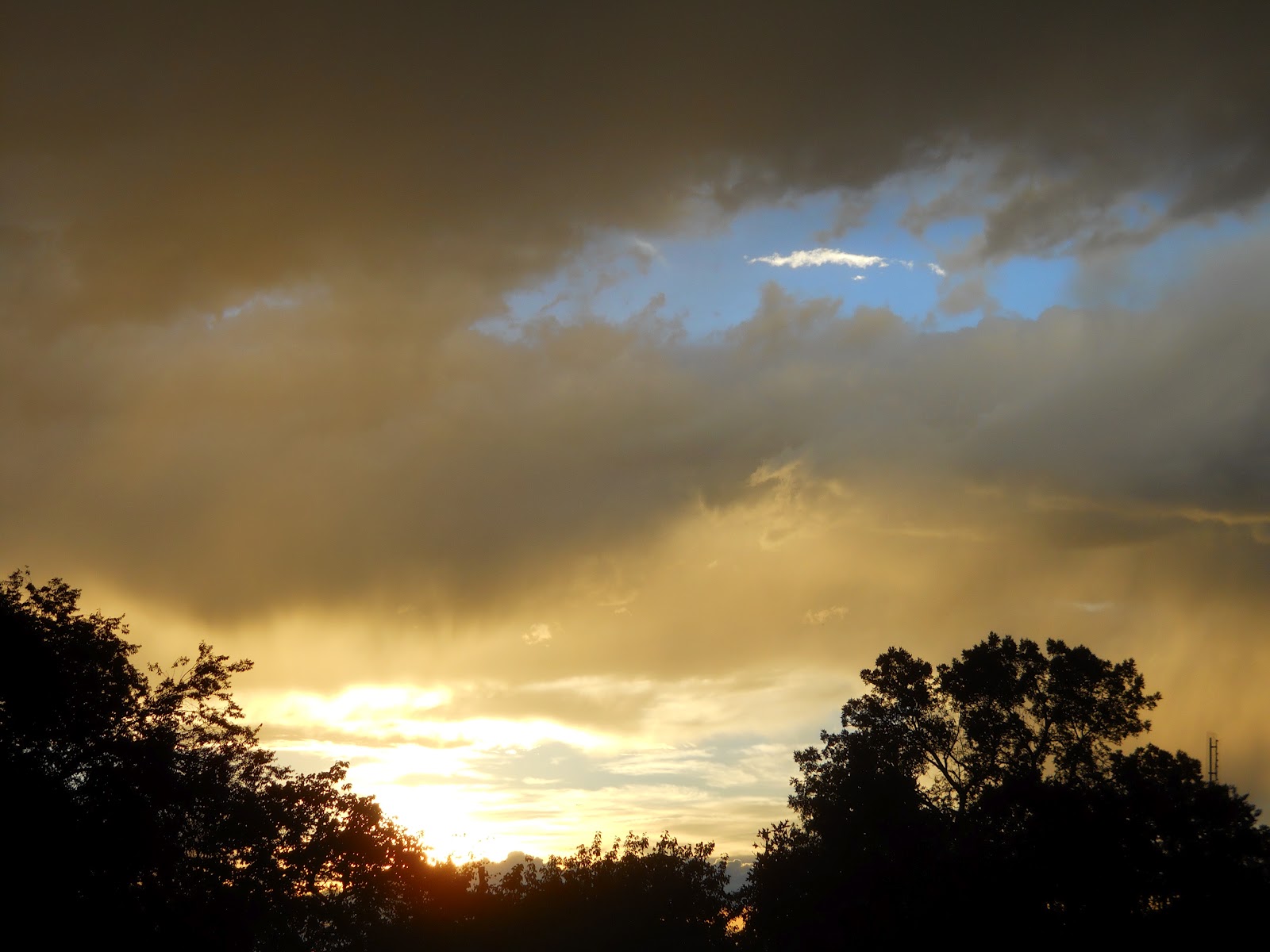
These are uncertain times. Heat hangs heavy, unnatural, skies cyclone-oppressive. Hate thickens, alien-green. The valley is still; not a blade bends.There is a highway out— love actually— but all stand stoic, lulled by the static dreadful blossoming impossible.
Somehow not even Bono can make it artistically kosher to love Neil Diamond. I'm not sure how that happened. Diamond was once a respected songwriter whose music was covered by the Monkeys, Deep Purple, Elvis and UB40. True, he did write one incredibly stupid hit about that little alien who wants to phone home. But, come-on, he's not the only one whose sentimental heart lit up when that insipid green munchkin rode a bike across the silver screen. Besides, we've forgiven Elton John for "Don't Go Breaking My Heart" and Paul McCartney for "Ebony and Ivory." Why doesn't the artistic atonement apply to Neil Diamond? Why, despite all of his good works, is he cut off from grace because of one or two lousy mistakes?
Stones is an amazing album. Perhaps one of the best. Like the Beatles white album or Fleetwood Mac's Tusk, even the cover is art. My copy, handed down from my mother who purchased it in 1971, has a subdued canvas colored background with a course linen fiber printed on it. In the middle of it is a photograph of Neil Diamond sitting on a park bench in front of a massive stone Italian-styled garden wall. An old and twisted tree stands in the right hand corner; a stone bust sits in a niche in the wall just left of center, just to right of Diamond, who sits stoically arms folded, his stone face looking out at the audience with no expression. He is barefoot, which with his stoic look and the old-world setting, gives his form the feel of a statue, adding to the crumbling, classical feel of the mostly monotone photograph of gray and olive. The cover reminds me slightly of Led Zeppelin's "Stairway to Heaven" album with the crumbling wall and portrait of the old man. There is the same heaviness about it.
The entire album is worth listening to, but I'll focus on side two. I believe this one side of vinyl contains some of the greatest lyrics ever written, although Neil Diamond only wrote two of the songs. I don't think that is a coincidence. Like Elton John's Blue Moves, this album is, in part, a reflective evaluation of the cost of fame. Elton John dealt with that by returning to his classical, jazz and blues roots. Perhaps, Diamond's decision to use other people's material is a reaching out to the void, hoping for an answer more significant than his own name. "I Am, I Said," his own song, definitely demonstrates the desire to be grounded in significance.
First, we have the title track, "Stones," one of Diamond's own:
The song starts with a simple strum of the guitar, and then enters the line "Stones would play inside her head," a startling image of uncomfortable weight and solidity oddly placed within the mind. He follows this up with the image of her bed being made of stones--no peace of mind and no rest for the body due to a solid mass that must be dealt with.
But, it's not a mass without meaning. We are not shoved into the nihilism of Hemingway here. This is not a world of nada y pues nada. The stones may be uncomfortable; they may be there to be dealt with; but they also provide shelter and shade for new beginnings:
You and me, a time for planting You and me, a harvest granting The every prayer ever prayed For just two wild flowers that grow on stones.
There is beauty here, but it isn't an easy beauty. It's more like the beauty the atonement brings, a grace that comes after the old has been broken down and something new takes root in the rubble.
This contrast of dark and light, of the jeweled flower among the rock, continues in the second song, "If You Go Away" written by Jacques Brel and Rod McKuen.
And then there's "Suzanne." Ah "Suzanne," what to say?... Leonard Cohen's lyrical masterpiece, but Diamond brings a weight to song that Cohen just wasn't able to do.
The song starts in the sensual world of materialism:
Suzanne takes you down to her place near the river You can hear the boats go by, you can spend the night forever And you know that she's half-crazy but that's why you want to be there And she feeds you tea and oranges that come all the way from China
Cohen concludes the first third of the song with "For you've touched her perfect body with your mind." Then, the song pivots from sensual world of light and aroma to the weighty divine:
And Jesus was a sailor when he walked upon the water And he spent a long time watching from his lonely wooden tower And when he knew for certain only drowning men could see him He said all men will be sailors then until the sea shall free them But he himself was broken, long before the sky would open Forsaken, almost human, he sank beneath your wisdom like a stone.
Next, comes Randy Newman's composition, "I Think It's Going to Rain Today," which also swings on a fulcrum. The first half of the song describes interior bleakness:
Broken windows and empty hallways A pale dead moon in the sky streaked with gray Human kindness is overflowing And I think it's going to rain today.
Here, "Human kindness is overflowing" is sarcasm, as indicated by both the music accompaniment and the lines that follow:
Lonely, lonely Tin can at my feet Think I'll kick it down the street That's the way to treat a friend
Human kindness is not overflowing.
Then comes the pivot. The music changes, becomes upbeat, and similar words take on new meaning:
Bright before me the signs implore me To help the needy and show them the way Human kindness is overflowing And I think it's going to rain today.
Here, it's not the weather that will rain, but the human kindness that is overflowing, love filling the cup up to the brim and raining down on humanity.
Notice the repletion of imagery and themes here. "Stones" starts with the hard imagery of rocks, but ends by noting that the stones provide shelter for "two wildflowers that grow." "Suzanne" echoes the flower imagery: "And she shows you where to look /Among the garbage and the flowers," here garbage providing shelter for the flowers. "Suzanne" also repeats the imagery of stone in, "he sank beneath your wisdom like a stone". Here, that weight is ambiguous, depending on how you read the lyrics. The line could mean, his wisdom sank unnoticed by those that executed Him. Or, as the "you" in the song seems to refer to the speaker, as we don't all know a "Suzanne," it can also mean his that His presence sank deep into the speaker's soul with great redeeming weight, which is how I read it.
Although Diamond is Jewish, I would argue that in purposefully selecting the songs he has chosen, Diamond is setting up Christ as a symbol for human redemption, which is carried to its climax in "I Am, I Said."
Diamond begins by comparing his new home of L.A. with his roots in New York, saying that he feels "lost between two shores." Although this is clearly biographical and must be taken literally, I will argue that he extends the literal image out into a metaphor for the human predicament. We are all lost between two shores. We are here in this temporal world, "among the garbage and flowers" as noted in "Suzanne," but we also have a divine, spiritual origin that deep down we can't forget, which leaves us feeling lost, ghostlike, unreal, like Christ, "almost human" and yet "almost divine," "lost between two shores."
And so we cry out--not to other men--but to the void, the divine, the spark that brought us into being because the "emptiness deep inside" calls us back to our true home, that distant memory before we were here.
In U2 at the End of the World, Bill Flanagan makes light of Bono's claim that Neil Diamond is a serious song writer.
Bono looked down his nose at my sarcasm and asked, "Do you know what 'I Am, I Said' is all about?
Flanagan spews out the surface meaning with the depth of understanding of a Pharisee, giving the literal background which inspired Diamond to write the song with little awareness that poetry gains weight as it is written that moves it beyond the initial impulse in scope.
Bono, not flinching, asserts, "God is described as the great I am. So, in that song Diamond is calling out to Jehovah. 'I am, I said," means, 'God, I said.' To who? To no one there! And no one heard at all, not even chair! Do you see? It is a song of despair and lost faith by a man calling out to a God who isn't interested!"
I agree. Well, mostly. If you take only "I Am, I Said" by itself that is true. It is Christ calling out, "My God, my God, why hast thou forsaken me?" before being transformed. But, taking in all of Stones it is the calling out to God in pain the moment before rebirth.
It matters not that Diamond is Jewish. Poets borrow metaphors all the time. Christian poets tapped into Greek mythology for centuries. Besides Jews do believe in Christ--they just don't believe he has already been born and died; but the idea of rebirth out of hardship is nothing new to them.
In "Yahweh," Bono puts it this way:
Take this shirt Polyester white trash made in nowhere Take this shirt And make it clean, clean Take this soul Stranded in some skin and bones Take this soul And make it sing, sing
Yahweh, Yahweh Always pain before a child is born Yahweh, Yahweh Still, I'm waiting for the dawn
It is almost as if Bono said to himself, alright the critics won't take "I Am, I Said," seriously because they won't take Neil Diamond seriously, I'll show them. I'll write my own "I Am, I Said," and they will take that seriously because "I Am Bono."
Of course I don't really think Bill Flanagan is an idiot. I think his U2 at the End of the World is a fine book. But, Flannigan is just one among many who for some bizarre reason are out to stone one of our finest song writers, Neil Diamond. Perhaps some day he will see the errors of ways and tap into the beauty of Stones. There is certainly sustenance there for those willing to listen.
the music has stopped; there is the rattle of ice, the dangle of conversation.
There is you--
in that soft pink sweater and dimpled smile, eyes all a glitter,
but it's only sparks of light dancing the surface, everything below is stone blue ice that looms towards my Titanic heart.
I'm jealous--of everything: of your density, that everyone here knows you as well as I. You, my wife, the stunning white weight of my life.
I'm jealous of these painters, these poets, these writers who flock around your jeweled presence to take refuge from the blue abyss that is our lives.
I hate how my words never come together with enough force to implode the lies.
Yet, I know there is an unseen wonder-- a small but significant canyon just beyond the endless suburban sprawl and nylon skies where a hawk still does fly.
And there is a narrow wash--a slot canyon carved through time. A great myth is buried there under the coral sands--the song of a great flood, of a great sacrifice, of a great love.
If the right poet were to find it--the right rhythms, the right breaths-- capture the terrible currents, the great horror, the tremendous sacrifice, especially the Christ-like love displayed in the aftermath--
well maybe, somehow these empty evenings of articulate conversation would mean something.
Therefore, I like the others hang on & grasp for the right line to end the endless arctic of our lives.
Recently, for whatever reason, I've begun to dream alternative lives. This poem came from a dream I had last night. It evolved as I wrote it, so it isn't the dream, but it's not too far off. The dreams are always centered around an imperfect world with lots of pain and heartache, but I always wake up feeling that everything is alright, it's just life.
Spring fever and heavy cold is not a great combination. To make things worse, my brother asked me to go on a long drive deep into nowhere, but I have deadlines and commitments. Not quite ready to face them, I went looking for a poem about unquenchable desire, what I used to call the forever search, captured magnificently in Bob Seger's "Fire Inside."
I found some old poems that focused on that theme to be sure. My life was once driven by the need for escape, a constant hunger for something else.
But somehow I've stepped through that door and into another reality. Sure, I still sometimes want to hit the open road. I still long for quiet, dark corners of an empty bar, even though I don't venture into such places anymore. Coffee always has a hand on my shoulder while it whispers in my ear, Go ahead have just one sip, which I don't do because I honor my religion.
But the void no longer calls me to fill it. There simply isn't that much left to fill. God has taken residence and I am satisfied. So instead, I was drawn to a poem I'd completely forgotten about:
The Myth of the Dot
It's a dark and rainy day.
A line of twenty or more ATVs
roars up Canyon Road,
headlights dancing
off the splashing rain.
Everyone wears matching
green and yellow
fluorescent plastic.
Everest and I go outside
to watch the tourists
ruin our way of life.
When they are gone,
he shows me his bug bite.
"You got bit by a mosquito."
"No, it's just a dot."
"How did you get it?"
"It just floated down from the sky
and got stuck.
Then someone glued it."
The poem was probably written the summer of 2004, and so Everest would have been four. O how I loved our long job-free summers at Dry Creek. Some of the magic was removed when we moved here, as it is now our standing place in life rather than a carefree retreat. Still, the magic of small wonders remains.
I don't know what Charles Schwab was doing in my dream,
but boy was he mad at Obama.
I tried to make a few counter-points,
but he just talked right over me.
So I just thought about the beauty of tulips in spring.
It's nineteen-seventy-something. I'm in second grade, and I've ditched Lynn, my girlfriend, somewhere over by the POD, an octagonal lunchroom separate from the school. We're playing kissing tag, and it's not that I'm so stupid that I don't know that the purpose of kissing tag is to get caught, it's that her cousin, Lucinda, is more into pinching, and she's very good at it. So, I've split the scene.
It's warm and snow melting off the comparatively hot pavement creates steam that rises in thin clouds about waste high, and they are golden glorious in the noontime sun. I've got spring fever and am feeling freaking high. I bellow out Paul McCartney's "Monkberry Moon Delight." I don't have a clue what it's about, but I love the feel of the words on the end of my tongue:
So I sat in the attic, a piano up my nose, And the wind played a dreadful cantata. Sore was I from a crack of an enemy's hose And the horrible sound of tomato. Ketchup, Soup and puree, Don't get left behind. Ketchup, Soup and puree, Don't get left behind.
I never did figure out the exact meaning of the song. As I grew older, it seemed to me it might have been inspired by B-grade monster movies, but it also seemed a finger to expectations--artistic, social, political and otherwise, Paul McCartney saying I'll be who I please and do what I please. It felt very revolutionary to me, and I loved its pure celebration of the sound of language.
Whenever, I'd get upset in high school or early years of college, I'd just fling words down on the page and play with them, make slightly irreverent, irrelevant nonsense out of them, like this:
More Talk ... Instead I gnarl on a bark stick, pour on the cats and say, "Gee this is very good, this is very meaty for a stick of wood." The termites tingle as they slide down my throat. What would I do for a feast on fat goat? I'd slit my mother's own throat!
I definitely had nothing against my mom. I just had something against propriety. I still do. I just fight the impulse more. I'm not so sure that's good. I think real reverence comes about when you're at least a little open to irreverence. Paul McCartney could write "Let It Be" and be sincere because he could also write "Monkberry Moon Delight." If he sat around always trying to write lofty songs, they'd have the impact of Hallmark Cards or the music of Air Supply.
So, to quote Paul--sort of--if you want to write well, leave your cats to Billy Budapest and let your piano be boldly outspoken.
I first came to poetry through music. When I was a teenager, I would listen to groups like the Cure, the Police, the Fixx, and the music would drive words--not just their words, but my words and their words mingled together, and I would write poems that, although mostly mine, would never have arrived without theirs--a sort of strange dialogue, where both are talking, but only I am listening. Here, I have gone back to my poetic roots, what I consider a righteous plagiarism--the spirit of one artist sustaining another. Perhaps, it is more for the young, but I enjoyed the Fixx moving me once again. After all, I am definitely old enough to qualify for a mid-life crisis, if not a little beyond that right.
Photo by Rio Brown
Life
Rose red sunsets
and maggots on the bone.
Golden fawn
in the dawn dew meadow
or dead on the road.
Flower blooming,
baby breaking
forth blood-slick
and God-glorious,
parents joy,
gentle rain,
terrible typhoon,
get your ass to your room!
Bitter bite of frost,
the limb-snap
thundering down,
happenstance
blossoming
the end
of one stopping
by woods to
enjoy
silence, ah silence, that moment of stillness....
before the storm,
kneeling,
pleading,
begging,
no, no, no more!
Sun pours
through verdant green canopy
Everything taken
is restored.
Sometimes a life-long devotion to the word doesn't seem worth it. It's hard to create continuously and receive very little reward. It's not money we crave, but readership, some sort of response to our calls out into the universe. Writers usually can spot other writers, so even if, like me, one is not well-published, most writers probably know a writer or two who are. That was true even for Emily Dickinson. That helps. If we can't get recognition by the masses, at least we receive a little recognition by others recognized by the masses. But, writers are all so busy writing and promoting their own calls out into the universe, even that is limited.
Sure, we should be satisfied intrinsically. We know when we've written something profound and when we haven't. We know that magic moment when we say, Damn, the world should hear this. Or the empty feeling having spent nine hours to produce nada. But we're human. We get angry, jealous. At least, I know I do. So, there are times we want to give up. Perhaps some do.
But all that disappears when we come across language that touches to the core. Then, the self, and all the fears, desires and jealousies that go along with it disappear. We don't care who wrote that poem, just that it was written at all. Once, in my undergraduate program, I won a poetry contest at the college, and a weird thing happened. I was disappointed. Not because I won, but because I had a friend who had written a better poem, which didn't even receive an honorable mention. I didn't so much feel bad for her; I felt bad for her poem. I knew it was so much better than mine and yet the world--or that small slice of the world that was our creative writing department--had failed to recognize the profound need for that poem to be heard.
It is at such moments I realize that being a poet is worth it no matter what the psychological costs are. I can't explain it, but words do matter. They carry the weight and grace of God.
For weeks, I haven't been able to work on my blog. The only thing I seemed to need to say is F-you! And rap artists fulfilled that need decades ago.
And then tonight, while browsing facebook in order to avoid writing, all that changed when I came across a video on Bill Moyers page of Stanley Jasspon Kunitz reading "Touch Me."
Even though Kunitz was the 10th U.S. Poet Laureate, I'd never heard of him. But, wow!--that poem reminded me of why I write. The universe needs poetry. Not everyone does. And if it does nothing for you, fine. But existence is not the same without small things said absolutely perfectly.
(This is a different reading, introduced by Garrison Keillor, not quite as powerful, but still amazing.)
There have been three times in my life when I did something
irrational and brave:I said, Screw it, I made a mistake, and I cut
chords with the past and almost started down the path to the sort of life I
wanted.But the first couple of times,
at the last moment, I faltered and clung to doubt and self-imposed limitations
instead of walking out of the picture I was in and into the one I wanted.Of course, it would not have been perfect, but if I’d had the courage to carry through,
it would have been perfect compared to where I’d been.
Pure sunlight shines between two Austrian pines my brother
and I planted back in ’96.The snow,
mostly in shadow, is cold, hard and blue.It seems like the perfect day for reading, drinking hot chocolate and
reflecting.Marci even made Chili.
What I want to reflect on here is moving from a literature
and life of isolation and disbelief to a literature and life of connection and
belief.I once thought I’d found my
bible, The Outsider by Colin
Wilson.It described perfectly the void
I was feeling and the literature I loved.A window, even if accurate, is just one view of existence.Having looked through other windows since
then, I’d like to go back and look out that window again.
I think all of this will come to play in this dialogue, but
I want to get right to the book, and when I found the book, and why it meant so
much to me.
It was a cold winter, and during the week I lived alone
in a dorm.I’d dropped out of school and
moved back to Dry Creek, this piece of family land that has never let me live
fully anywhere else.But there was
nothing here for me.The only jobs
available were the type for college dropouts.I ended up being a janitor at an indoor mushroom farm on the other side of town and decided a formal
education might not be so bad after all, so I went back to school in a bigger town, two hours from Dry Creek. However, I was twenty-six and really didn’t
belong in an undergraduate program anymore.I’d had some poems published, had been somewhat involved in a writing
community in El Paso. After returning to Utah, all I wanted to do was get my degree, so that
I could get a teaching job in my hometown and live the rest of my days at Dry
Creek, writing poems about stone, cold water, deer carcasses and drunken
nights in the town’s two bars.I had no
belief beyond sight—to live and bear witness to a meaningless universe, which
was at least bearable if I were there to witness a deer bounce down a gravel
road covered in thin snow, the cottonwood along the creek a faint pink in
the last day light.
Back at in college, I’d hear girls laughing outside my dorm room, but
they sounded so young, so remote, like distant memories.They weren’t even that.I was incredibly shy and my romantic
adventures were few and far in between.
Older, I still liked the giddy laughter outside my walls, but it was different.It did not stir the restless hunger
of a teenager.No, it was more like the
fondness of a father.I had never had a
real college experience, but I was mature enough to realize I’d missed that
train.If there was a world for me, this
wasn’t it.
So, during the week, I walled myself in my little
cinderblock room to write.On weekends,
I went home, got drunk with a band of single and divorced Paiute women and a
drop-out actor, and when not at the bar, soaked in as much of Dry
Creek as possible.The next week I’d
start the process all over again.
When at school, I seldom ventured outside my dorm except for
class and to go to the library.My
writing professors admired my craft, but as I was writing at a master’s level
and most of my classmates had barely opened a book, I had no connection with my peers.I
remember Jim Aton would have us rate each other’s papers and then would
give us his rating.According to my
peers, my paper was almost incomprehensible.According to him, I should get it published.So, I doubled up on my studies to get out of
there.
The campus had a beautiful, new library, with a three story
glass atrium, but hardly any books.On
top of that, they had all-but-illiterate undergraduate students weed the small
collection they had.As a result, I’d
pick up collectible books on the discard rack for 25 cents.
One of the books I picked up--not a collectable--was The Outsider by Colin Wilson.As it so accurately named what I’d been feeling and capturing in my own
writing, it quickly became my Bible.
I still have the book.It’s the 1982 Tarcher edition fromHoughton Mifflin with a forward by Marilyn Ferguson.The cover is simple: a black
rectangle with a thin red border. Centered near the top is the title and author, also red print.It looks serious, revolutionary—and when
first published in 1956, it was.
Chapter One, “Country of the Blind,” begins as follows:
At first sight, the
Outsider is a social problem.He is the
hole-in-corner man.
Damn, I thought, that’s me.
He then quotes from Henri Barbusse’s novel, L’Enfer:
In the air, on top of
a tram, a girl is sitting.Her dress,
lifted a little, blows out.But a block
in the traffic separates us.The tramcar
glides away, fading like a nightmare.
Moving in both
directions, the street is full of dresses which sway, offering themselves
airily, the skirts lifting; dresses that lift and yet do not lift.
In the tall and narrow
shop mirror I see myself approaching, rather pale and heavy-eyed.It is not the woman I want—it is all women,
and I seek for them in those around me, one by one.
Defeated, I followed
my impulse casually.I followed a woman
who had been watching me from her corner.Then we walked side by side.We
said a few words; she took me home with her… Then I went through the banal
scene.It passed like a sudden
hurtling-down.
Again, I am on the
pavement, and I am not at peace as I had hoped.An immense confusion bewilders me.It is as if I could not see things as they were.I see too deeply and too much.
I knew that feeling immediately.It was my old friend.I’d written poems about it:
The Question
I think normal people just go to sleep, which isn’t a bad idea, and I use to. Nine o’clock always as a kid, and looking forward to it, that cold blue room in the lean-to add-on. I plugged in the electric blanket and cuddled up after a firm talk with God about how if I did this, he’d do that, and I’d grow up happy, successful and loyal, with a wife, five kids, an architectural firm and a house, a great space of light and body headed by me, Patriarch, like God headed the Church, the building, the body, the light.
But then, I don’t know, something happened.
Oh, I know it happens to all of us, and few of us really sleep, with houses balanced on loans, beds suspended over arguments with elastic smiles, marriages held together with kids as tape, marriages not held together, kids torn like tape, a piece on each flap, flapping in the wind, the guilt of having torn such a little body, but how do you live in a house so small, and with her?
And how does she stand you,
both of you growing, swallowing space?
All healthy things get bigger,
more complex, cells and histories of cells, whole cities wiped out within with new information and cable TV. The cage can only make you rabid, the things she says ticking off in your head.
Okay, so I don’t have it so bad.
I have none of this. I have one single question that keeps me up at night:
How do I make it mine?
At the time I wrote that poem, my mother thought the ending-line,“How do I make it
mine?” referred to marriage.And it does,sort of, but not really, because prior to it “something
happened,” which is the first fulcrum of the poem, a pivot between the secure
fixed universe of youth and the open, uncertain universe of adulthood. What I desired to make mine was life in all its complexity, but something had robbed me of that possibility. What was that “something”? When I opened The
Outsider, I knew immediately my something was the same something that makes the romantic
encounter in L’enfer sobanal.Like Henri Barbusse’s protagonist, I also saw “too deeply and too much.”
Or so, I thought at the time.In this series of essays, I will in fact
argue that like so many of my predecessors,
even though I saw deeper than many, I actually didn’t see deeply enough.
But, I'll get to that later.
I dreamt that the key to poetry is the music of Etta James.As I really didn’t have a clue who Etta
James was, I thought this is either
ridiculous or quite significant.(Note:a couple of weeks earlier I dreamt I would be
the father of a major school of poetics, Rammed-Earth
Poetry, so clearly my id is searching for some sort of significance here.)Still, could a dead relative of mine, or Etta
herself, or perhaps even God Almighty be directing my artistic pursuit from the
other side?I don’t know.Part of me always wants to write off the muse
as pure crap, but some of my best poems have come to me in dreams.So, then I think, well, it’s just the
workings of the subconscious.But, when
I put on Etta this morning, I thought sweet
damn that lady do sing the blues so sweetly redemption is hanging out on the
street corner just waitin to smile up at me with great big, black eyes that
contain all the love in the universe!
And I thought there might be something to this crazy dream
after all.Now, I’m not ready to toss
William Carlos Williams in the trashcan yet, but maybe there is something other,
something just as real, but different than the right-on images, perfect line
breaks, and plain ol’ American dialect--something that’s missing not only from
my own work, but also the work of my heroes.
I know repetition draws me, the chant, and going back
mid-step, before your foot is fully forward, like Van Morrison does:
But how do you get that on the page independent of the blues
band?If, I say if, I say, if it’s the ramble
and the row, the slow winding out, then pulling back in, then bellowing out
heart and soul that drives poetry, the eye has to be able to pick that up, line
by line, so the music forms in the reader’s mind.
Is it doable?I don’t
know.Or is that even why Etta James is the heart and soul of poetry?
But, I do know this: although I woke up thinking I had a crazy
dream, after listing to Etta, I do
believe she is indeed the heart and soul of poetry and I’m more than
willing to explore possibility that some of her spirit can be
captured in the unaccompanied line.
Besides, it’s kind of like deciding that Julia Roberts holds
the secret to acting. Even if you’re
wrong, after seeing her smile, quite frankly, who gives a damn?After hearing Etta, my life aint gonna never be the
same nohow.And I thank whatever dead
relative cared enough about to let me in on that secret.
Sit in recliners
& watch
television
flinching
now & then
from pain
unfolding
like spring.
There are meadows
in the mind, but
the days are blotchy--
a brief moment
of yesteryear
in intense sunlight
before clouds
of reality
move across
the valley
& blacken
the front.
Prayers
are worn
like windbreakers,
always a little
too thin.
Without you, this valley is immense and unbearably vacant.Yet, I
take the long way home because I fear the void that waits with a cat, a rabbit, two dogs, five fish and six chickens to jump all over me.
I go slow down past the dunes and then the water deep below the surface feeding the thorn- thicket of Russian Olives,
the black
mass of the basalt flow heavy in the distance, a scab where earth broke open hot & living.
I never want a pain like that—
where to pulse and throb and bleed molten rock is the only way to sustain against erosion at a profound level, life always waiting to be engulfed by the sea.
No, an island
is no more the life for me.
The dogs rush out to see me.
They too hate the house without you. I feed the chickens; the dogs take a crap. We go in.Bunny Boy lets me know he too has been alone and wants attention.
Perhaps the fish
swim in bliss oblivious to this house ceasing to be home.
I’m about to settle
into blue or fade to sepia tone when Lloyd shows up & I’m glad together we can hate Republicans until you get home.
This is the second poem in a series of linked-poems I plan to write in Glory, a novel-in-verse based loosely on Visions of Glory by John Pontius, a spiritual account of “Spencer,” an unidentified individual who shared his visionary experience with Pontius. Other than noting that Spencer's father killed someone while driving under the influence as a teen, that he was sent to war, that he married and left Spencer's mother, Pontius does not provide many details here. This allowed me free reign of my imagination. I thought, Where would a returning soldier be likely to end up? Galveston. Then, I picked a likely year. When I typed in "Galveston, 1947" to get a feel for the place and time, I found '47 was no ordinary year for the big bay. But, I didn't know how to finish the poem. Then, as is often the case, two borrowed lines came to me--"light out wanderlust / head us out to sea"--that my mind heard wrong in order to fit the poem: "light up wanderlust / head out to sea".
Galveston, November, 1947
It was gray day along the Strand
when my mother met my father. She didn’t see the metaphor coming even after they crossed the causeway in his new Series 62 convertible Cadillac to see the ruins of Texas City,
and later sitting on the bright red hood,
eating cheese and cucumber sandwiches amongst the lingering empty car hulls in a vacated parking lot a quarter mile from the explosion.It was romantic holding each other fiercely against the wind amongst twisted, ash-covered metal exoskeletons.
My father skirted the war, his youth (and no doubt the drunken episode in Farmington, Utah that led to his sentence), but reveled to recover the day the Grandcamp, still moored at dock, rocked Galveston Bay.
Mother sat transfixed by the thick, short wave of his bangs casting a thin, black shadow across his brow, adding mystery and excitement to details he rattled off with the passion of a poet:
There I was, amongst falling bales of burning twain. Hell, the anchor was hurled across the entire city. Two sightseeing planes had their wings torn off. Even in Galveston blokes were knocked to their knees, in Houston windows shattered. They even say the shock wave shook Louisiana. Hell, Monsanto bloody Chemical Company never paid me enough anyway. Damn well deserve to be wiped away.
And over the radio, came a warning,
from Harry James and Marion Morgan--
Heartaches
Heartaches
My loving you meant only heartaches...
But the daughter of a preacher, my mother just couldn't hear it. Light up wanderlust, head us out to sea.